

The government on Friday cleared disinvestment in two bluechip state-owned companies IOC and Bhel, which would fetch over Rs 7,300 crore (Rs 73 billion) to the exchequer in the current fiscal.

India's sourcing from China may not necessarily be for cost-effectiveness alone but also for the lack of domestic qualified bidders, technology or other know-how.
Bajaj Auto, BHEL, Infosys, ITC and RIL are among the 12 listed Indian companies which have figured in the latest list of 'Fabulous 50' of prestigious international magazine Forbes Asia.

Equity investors will track the trading activity of foreign investors, global trends and ongoing earnings results for further cues, and benchmark indices may continue to witness consolidation in a holiday-shortened week amid the monthly derivatives expiry, analysts said. Markets fell sharply last week amid massive foreign capital outflows and dismal Q2 earnings so far. Weakness in the markets might continue in the near term amid cautiousness among investors ahead of the US presidential election early next month, an expert said.

'Those betting against PSUs will likely be punished in this upswing.'

The US Fed interest rate decision, ongoing quarterly earnings, macroeconomic data and FII trading activity are the major triggers that will drive stock markets this week, analysts said. Investors would also track global market trends and the movement in global oil prices for further cues. "This week, the focus will shift to global cues, particularly the US markets," Santosh Meena, Head of Research, Swastika Investmart Ltd said.

This includes distancing themselves from the new and emerging super-critical technology.
Take this quiz to get the skinny on calories in your favourite junk food: chaat.

Gaurav Deepak has raised funds for about 100 new-age entrepreneurs.

The last batch of quarterly earnings, global trends and trading activity of foreign investors will guide the equity market movement in a holiday-shortened week ahead, analysts said. Volatility may continue amid investors' cautious approach in the election season. Markets will remain closed on Monday due to the fifth phase of the Lok Sabha elections in Mumbai.

Mahesh Londhe, son of a Pune bhel vendor cleared CA in first attempt. Londhe, who was sponsored by Thermax CEO MS Unnikrishnan, now wants to take up a corporate job in a manufacturing firm

Notwithstanding the recent sharp decline in the stocks of public sector companies, analysts at Jefferies remain bullish on this segment. State Bank of India, Coal India, and NTPC are their top picks in this space, they said in a recent note. The public sector undertaking (PSU) or state-owned enterprise (SOE) index, with a 70-percentage-point outperformance versus the National Stock Exchange Nifty50 over the past 12 months, comes after a decade of underperformance before 2020.

Notwithstanding concerns about lofty valuations, smallcaps recorded their most significant monthly gain in nearly three years in November. The National Stock Exchange Nifty Smallcap 100 finished the month with a 12 per cent gain, the most since February 2021 when it rose by 12.2 per cent. After declining by 4.1 per cent in the preceding month, the Nifty Midcap 100 rose by 10.4 per cent, the most since July 2022.

Fresh order wins for capital goods and industrial companies may have seen a major slump due to Lok Sabha polls in the first quarter of the current financial year (Q1FY25). At the same time, revenue and profit growth trajectory is expected to have stayed the course, according to brokerage firms. Elara Capital, Motilal Oswal, and InCred Equities expect this sector universe to report a 12- 21 per cent growth in revenue, 21 -36 per cent growth in Ebitda and 24-38 per cent growth in profit on a year-on-year (Y-oY) basis.
The rumour verification process would now be triggered by changes in price or 'material price movements', as the paper defines it. What this means is that companies would need to verify rumours only if the share price moves significantly.

Stock markets would take cues from the upcoming macroeconomic data announcements and global trends besides keeping a watch on the trading activity of foreign investors, analysts said. The last batch of the ongoing earnings calendar would trigger stock-specific action, traders said. "This week, we have to deal with macroeconomic data on both the domestic and global front.
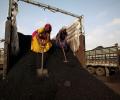
Coal India looks set to achieve its 2024-25 (FY25) production targets. If it can achieve its aim of ramping up Fuel Supply Agreement (FSA) and e-auction volumes, along with cost-saving, evacuation and infrastructure-improvement projects, the company could maintain its momentum as a critical infrastructure and core industry performer. Analysts estimate e-auction volumes of 108 million tonnes (MT) in FY25 and 120 MT for FY26, which is encouraging given the premium of e-auction prices which are consistently over 50 per cent higher than FSA.

Adani Power, part of the Adani group, plans to add close to 6 gigawatts (Gw) of new power assets in the next five years, according to an investor presentation by the company. That is clearly meant to ride on India's burgeoning power demand. But there is another side to it: All of this new capacity is expected to be thermal power, or power produced from coal.

Indian Railway Catering and Tourism Corporation (IRCTC), the Indian Railways' wholly-owned listed subsidiary, is eyeing partnerships to offset recurring costs incurred in train operations, which is part of its two-year-old diversification from core catering and ticketing businesses. To this end, it is courting public sector undertakings such as Bharat Heavy Electricals (BHEL) and others to create a special purpose vehicle for the routes for which IRCTC has bid. The Railway ministry opened bids for public private partnerships in passenger train operations in July 2021 and received bids to operate 29 pairs of trains with around 40 modern rakes that would entail an investment of Rs 7,200 crore.

In the prevailing difficult circumstances, the Congress is the only party that can provide capable and decisive leadership to the country, Kharge asserted.

Israel has expressed interest in sharing its expertise on water purification and waste water treatment under Prime Minister Narendra Modi's pet project for cleaning river Ganga.
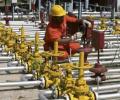
Oil explorer ONGC again emerged as the highest profit-making PSU of the country during 2012-13 while telecom major BSNL turned out to be the biggest loss-making enterprise, says the Economic Survey.

Public-sector enterprise stocks have seen a good run thus far in 2023-24 (FY24), with the S&P BSE PSU Index surging by over 26 per cent during the period, compared to an 11 per cent increase in the benchmark S&P BSE Sensex.

On Govinda's 60th birthday on December 21, Subhash K Jha looks back at his top 10 songs.

Nath said talking about "mandir-masjid" will not generate employment.

'If private capex has to kick in, there should at least be 2-3 years of visibility.'

An intriguing pulau that could be a great lunch fixture

Test your knowledge of Indian street food with this fun quiz!

The AAP on Wednesday last had posted a video story on 'X' featuring industrialist Gautam Adani and Prime Minister Modi. The next day, the party posted a picture of Adani and Modi, and alleged that the prime minister works for the industrialist and not the people.

Looking for party starters for New Year?

Two major hydel projects being built by construction majors GVK and L&T have suffered severe damages in the floods which hit Uttarakhand last week.

Capital goods companies are likely to report double-digit growth in sales and profit for the first quarter of the 2023-24 financial year (Q1FY24), according to analysts. The performance will ride on lower raw-material costs and healthy execution of orders. Sales by capital goods companies are likely to increase 13-20 per cent year-on-year (YoY), five domestic brokerage firms said.

The companies that have seen sharp erosion of market wealth include YES Bank, Indiabulls Housing Finance, Zee Entertainment, Vodafone Idea, and Bharat Heavy Electricals.
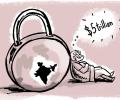
While seven companies bagged orders worth Rs 42,000 crore, industry experts said most of this new order activity was a spillover, and fresh project finalisation remains weak.

Government-owned companies are more generous in rewarding their shareholders with dividends.

Gandhi claimed that Dalits, tribals, and Other Backward Classes were made bonded labourers and their participation was lacking in big companies, hospitals, schools, colleges and courts.
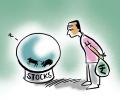
Analysts attribute the surge to a host of factors, particularly the interest shown by the retail investors in these two market segments.

Domestic quarterly earnings, global trends and foreign fund trading activity would dictate the movement in equity markets, which may face volatility amid the scheduled monthly derivatives expiry this week, analysts said. Equity markets took a breather last week. The BSE Sensex declined 298.22 points or 0.48 per cent and the Nifty dipped 111.4 points or 0.60 per cent.

India's economy will see the fastest dollar nominal growth in the world in 2015, Credit Suisse says.
